Low Email Open Rates? Common Reasons and How to Fix Them

Updated October 26, 2026
8 min read
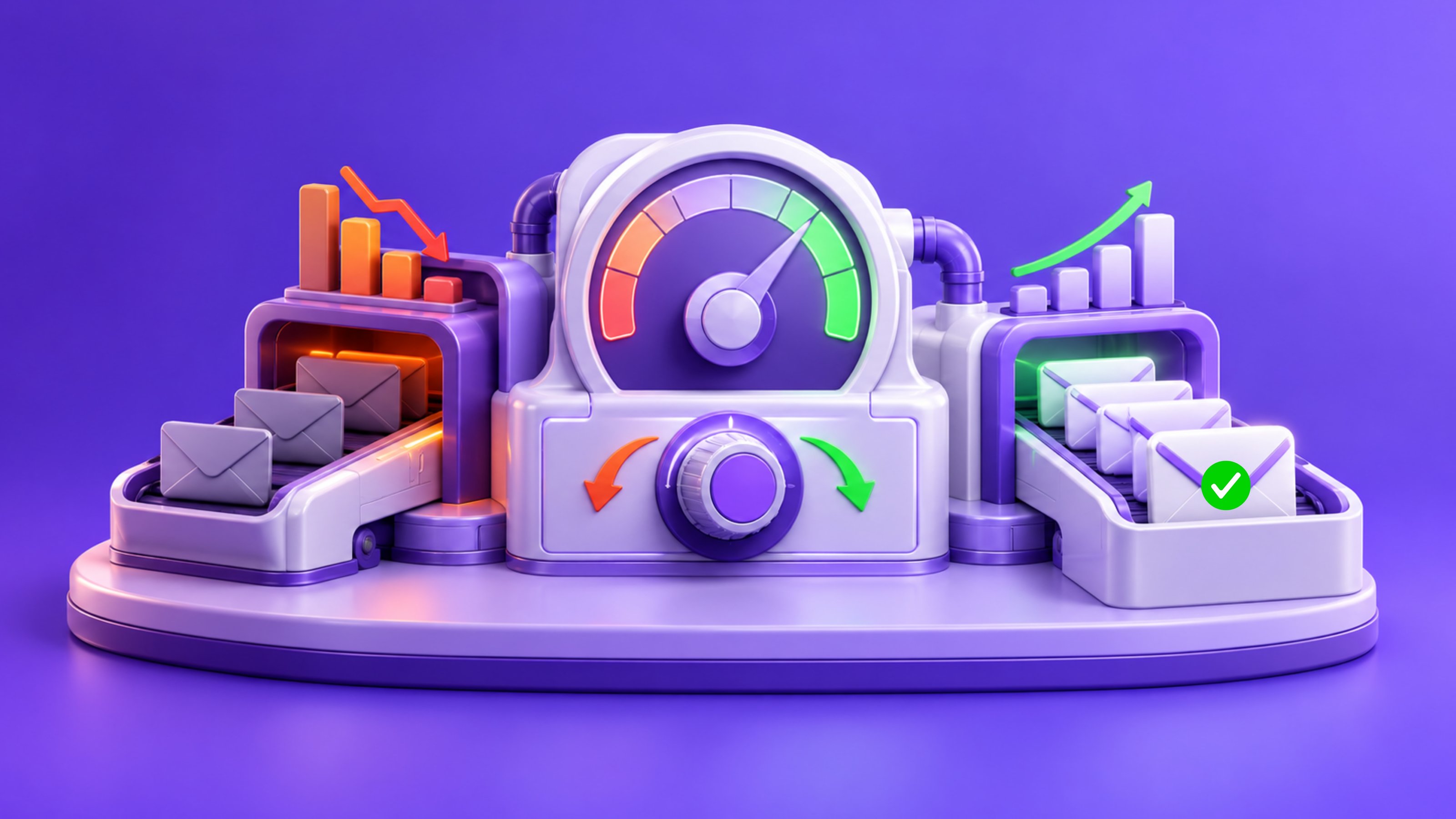
Email marketing remains one of the most effective ways for businesses to connect with their audience. But what happens when your carefully crafted emails aren't getting opened?
Low email open rates can be frustrating, especially when you've invested time creating valuable content, writing compelling subject lines, and growing your subscriber list. However, the problem isn't always your message. Factors like email deliverability, sender reputation, and list quality can all affect whether your emails reach your audience.
Understanding what's causing low open rates is the first step toward improving your email marketing performance. Let's explore some of the most common reasons your subscribers might not be opening your emails and what you can do about them.
What Is A Good Email Open Rate In 2026?
Your email open rate represents the percentage of delivered emails that are recorded as opened by recipients. For example, if 1,000 of your emails are delivered and 300 are recorded as opened, your open rate is 30%.
According to Constant Contact's email marketing benchmarks, the average email open rate across industries was 30.8% in the first quarter of 2026. However, open rates can vary significantly depending on your industry, audience, and email marketing strategy.
Open rates also aren't as accurate as they used to be. When Apple Mail users turn on Apple's Mail Privacy Protection (MPP), Apple preloads email images, including tracking pixels, making some emails appear opened even when subscribers haven't read them. Benchmark averages can include these automatic opens too.
So the most useful comparison is your own open rate over time, read alongside click-through rates, conversions, bounce rates, and spam complaints. Our guide to the 8 key email metrics you should be tracking explains what each one tells you.
1. Your Subject Lines Aren't Catching Attention
Your subject line is one of the first things subscribers notice when your email arrives in their inbox. With so many messages competing for attention, a generic or unclear subject line can easily get overlooked.
Think about the difference between receiving an email with the subject line "Our Latest Newsletter" and one that says "5 Simple Ways to Improve Your Email Campaigns." The second example immediately communicates value and gives subscribers a reason to open the message.
Effective subject lines should be concise, relevant, and engaging. Try highlighting a specific benefit, asking an interesting question, or creating curiosity without misleading your audience.
Avoid excessive capitalization, unnecessary punctuation, or exaggerated promises. These tactics might win the open, but they cost you trust, and sometimes a spam complaint.
2. You're Not Optimizing Your Preview Text
Your subject line isn't the only opportunity to grab someone's attention. Email preview text, also known as preheader text, appears alongside or underneath the subject line in many email clients.
This small section gives subscribers additional context about your message and can influence whether they decide to open it.
For example, if your subject line says "Is Your Email List Hurting Your Deliverability?" your preview text could say, "How undeliverable addresses quietly hurt your inbox placement."
Together, these elements communicate a clear message and encourage readers to learn more.
When preview text isn't customized, email clients may automatically display the beginning of your email, which could include a generic greeting or unrelated information, such as "Having trouble viewing this email?"
Take advantage of this space by reinforcing your subject line, highlighting a benefit, or introducing a question your email will answer. Put the key point in the first few words, since longer preview text often gets cut off on mobile.
3. Your Emails Are Landing In Spam Folders
Sometimes, low open rates have nothing to do with your content. Your emails might not be reaching subscribers' inboxes in the first place.
Even when an email is accepted by a receiving server, it could still end up in the spam folder instead of the inbox. Your sending platform still counts it as delivered, so it lowers your open rate even though almost no one sees it.
Mailbox providers evaluate factors such as sender reputation, email authentication, spam complaints, and sending behavior when determining where messages should be placed.
Google and Yahoo introduced stricter requirements for bulk email senders in 2024, including authentication standards, one-click unsubscribe, and a spam complaint rate below 0.3%. Microsoft followed with similar rules in May 2025. Google also increased enforcement against noncompliant email traffic beginning in November 2025, and mail that fails its requirements can now be rejected.
To improve your chances of reaching the inbox, make sure your domain is properly authenticated. Gmail expects every sender to have SPF or DKIM, and bulk senders need all three: SPF, DKIM, and DMARC. It's also important to monitor your sender reputation and avoid sending emails to people who haven't agreed to receive them.
An inbox placement test shows whether this is your problem. Emailable's Deliverability tools report where each campaign lands and whether authentication passed, and can alert you if your domain or IP appears on any of 120+ real-time blacklists.
4. Your Email List Contains Undeliverable Or Outdated Addresses
Your email list might be larger than ever, but that doesn't necessarily mean it's healthy. Email addresses naturally become outdated over time. People change jobs, abandon accounts, switch providers, or simply stop using certain inboxes.
When you keep sending campaigns to undeliverable or inactive addresses, you risk higher bounce rates and a damaged sender reputation. High bounce rates can signal poor list management to mailbox providers, potentially making it harder for future campaigns to reach the inbox. This is why regular email list cleaning is essential.
Email verification helps identify undeliverable, disposable, and other potentially problematic email addresses before you send your campaigns. Removing these addresses can reduce avoidable bounces and improve deliverability.
Using a service like Emailable allows businesses to verify their email lists and identify addresses that could negatively affect campaign performance. Maintaining an accurate, healthy email list is a key foundation for successful email marketing.
5. Your Emails Aren't Personalized Enough
Subscribers are more likely to engage with emails that feel relevant to their interests and needs. Personalization has become an important part of email marketing, but it involves much more than simply including someone's first name in the subject line. Effective personalization means delivering the right content to the right audience.
For example, an online retailer might send product recommendations based on previous purchases, while a software company could share educational resources based on how customers use its platform.
Email segmentation makes this possible by dividing subscribers into smaller groups based on shared characteristics, preferences, or behaviors.
You might segment your audience according to purchase history, location, engagement levels, or where they are in the customer journey. Instead of sending identical messages to everyone, segmentation allows you to create more targeted campaigns that better match subscriber expectations.
The more relevant your content is, the more reasons subscribers have to continue engaging with your emails.
6. You're Sending Emails Too Frequently
Finding the right email frequency can be challenging. Sending too many messages can overwhelm your audience, while sending too few might make subscribers forget your brand.
The ideal frequency depends on your industry, audience preferences, and the type of content you're sharing.
The key is to focus on consistency and value rather than sending emails simply to maintain a schedule. If open and click rates decline while unsubscribes or spam complaints increase, it may be time to reconsider your approach.
Watch complaints closely. Google recommends keeping your spam rate below 0.1%, and subscribers who feel buried in email are quicker to hit the spam button than to look for the unsubscribe link.
You can also give subscribers more control by allowing them to choose how frequently they receive emails, so they can hear from you less often instead of leaving altogether.
7. You're Not A/B Testing Your Campaigns
Even experienced email marketers can't always predict which subject lines, content, or sending times will perform best. That's where A/B testing comes in.
A/B testing compares two versions of an email to see which performs better with your audience. For example, you could test a short subject line against a more descriptive one, compare different preview text, or experiment with sending campaigns at different times. The important thing is to test one major element at a time. This makes it easier to understand which change influenced your results.
Over time, these small experiments can reveal valuable insights about what your subscribers respond to. Because email privacy features can affect open rate accuracy, consider measuring clicks and conversions alongside opens when evaluating your tests.
Regular testing helps you make informed decisions and continuously improve your email marketing strategy.
8. Your Subscribers Are No Longer Interested
Not every subscriber will remain engaged forever. Some people may have joined your email list to receive a discount, download a resource, or learn about a specific product. Once they've received what they needed, their interest may decrease. Continuing to email disengaged subscribers can hurt campaign performance and may contribute to deliverability problems, since mailbox providers notice when a large share of recipients never engage.
Rather than immediately removing every inactive contact, consider launching a re-engagement campaign. You could remind subscribers about the benefits of staying connected, share useful resources, or ask whether they'd still like to receive your emails. If someone continues to show no meaningful engagement, it may be worth suppressing that contact from future marketing campaigns.
Remember that a smaller, engaged email list can be more valuable than a large list filled with people who never interact with your messages.
How To Improve Your Email Open Rates In 2026
Improving email open rates requires a combination of engaging content, effective targeting, and strong email deliverability practices.
Start by reviewing your campaign performance and identifying potential issues. Work through them in this order, since polishing subject lines won't help if your emails never reach the inbox:
- Check where your emails land. Run an inbox placement test and confirm that SPF, DKIM, and DMARC are passing.
- Clean your list. Verify your addresses, remove undeliverable contacts, and keep bad addresses out at signup.
- Deal with inactive subscribers. Run a re-engagement campaign and suppress the contacts who don't respond.
- Improve what subscribers see. Test subject lines and preview text, segment your audience, and adjust your sending frequency.
- Measure what's real. Track clicks, conversions, bounces, and complaints alongside opens.
Final Thoughts
Low email open rates don't necessarily mean your email marketing strategy isn't working. Sometimes, a few adjustments can make a meaningful difference. As email marketing continues to evolve in 2026, understanding deliverability, subscriber engagement, and the limitations of open rate tracking is more important than ever.
By creating relevant content, testing your campaigns, and maintaining a healthy email list, you can improve your chances of reaching subscribers and encouraging meaningful engagement.
Ready to improve your email list quality? Emailable helps you identify undeliverable and potentially problematic email addresses, reduce avoidable bounces, and support better email deliverability so you can focus on connecting with your audience. And with inbox placement testing, you can see where your emails actually land.