Why Email Verification Belongs in Your Signup Flow

Updated September 21, 2026
8 min read
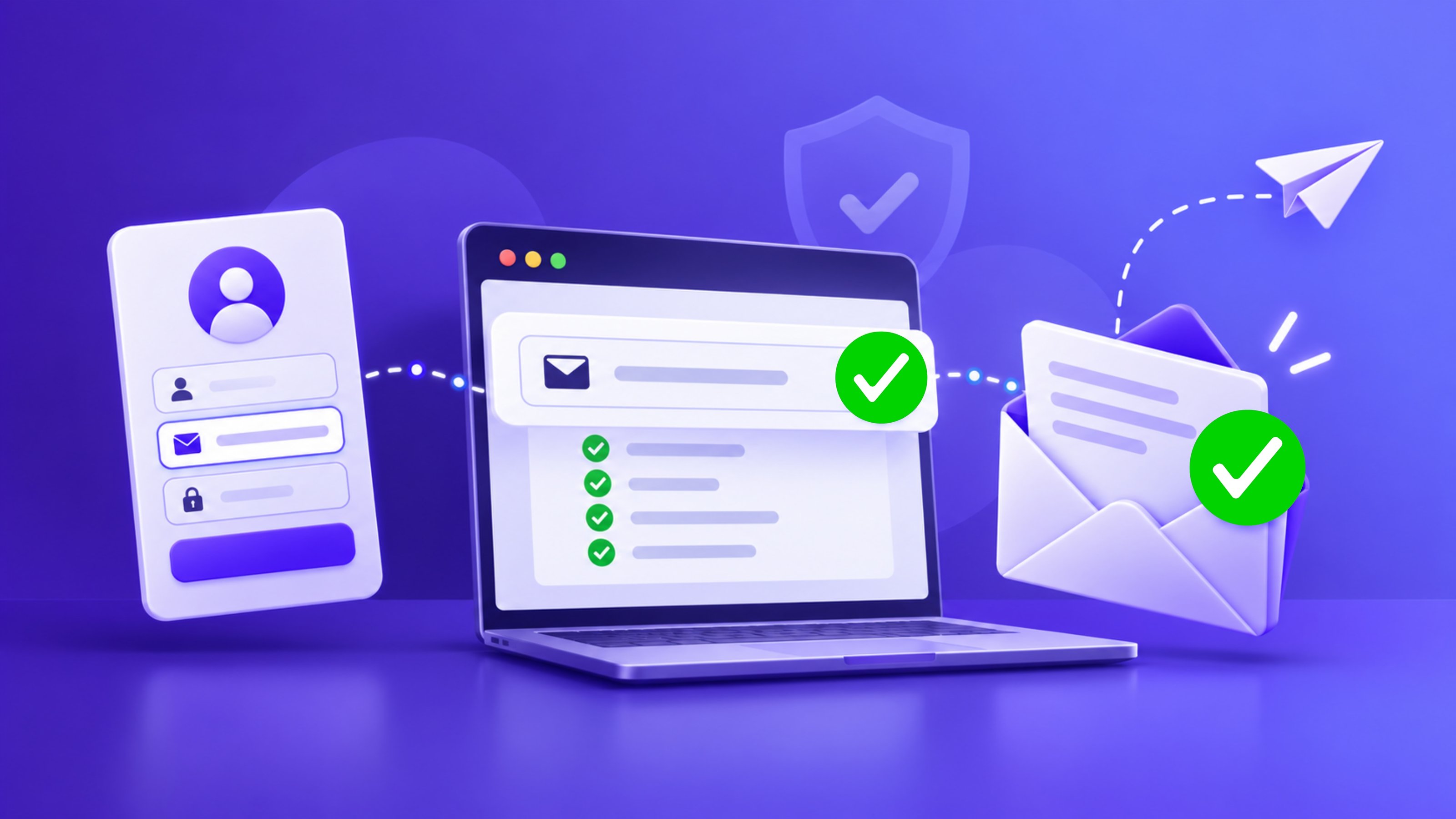
Why Email Verification Belongs in Your Signup Flow
A new visitor lands on your website, fills out a form, and enters their email address. Maybe they’re creating an account, signing up for a newsletter, downloading a resource, requesting a demo, or starting a free trial. They click submit, and just like that, you have a new contact.
At least, that’s how it looks.
But what happens if the email address they entered has a typo? What if the address doesn’t exist, belongs to a temporary inbox, or was entered incorrectly by accident? Without a way to catch the problem, that email address can make its way directly into your database and eventually into your CRM, email marketing platform, and other systems.
This is why email verification at the point of signup matters. Instead of waiting until a campaign bounces or your database needs a major cleanup, real-time email verification allows you to check an address when it enters your system, when it’s still easy for the person submitting it to correct the mistake.
The Problem Starts at the Point of Collection
Email list hygiene is often treated as something marketers do before sending a campaign. You collect your contacts, export your list, run it through an email verification service, like Emailable, remove undeliverable addresses, and then send your campaign.
That process is important, but it’s also reactive. By the time you’re cleaning your list, those email addresses may have already been sitting in your database for weeks or months. They may have triggered automated emails, entered marketing campaigns, been assigned to sales representatives, or been synced across several different platforms.
Think about how many ways someone can enter an email address into your business. They might sign up for an account, subscribe to your newsletter, download a piece of content, request a demo, register for an event, or make a purchase. Every one of those interactions creates an opportunity for inaccurate email data to enter your system.
And not all undeliverable emails are intentionally fake. A simple typo is enough.
Someone might type john@gmial.com instead of john@gmail.com, or leave out a character from their address. These mistakes are especially easy to make when someone is filling out a form quickly or using a mobile device. Other people may intentionally use a temporary or disposable address because they want access to something without providing an email they regularly use.
Whatever the reason, the result is the same: your database now contains an address that may not be useful for communication.
That’s why it makes sense to move verification closer to the moment when the email is collected. Rather than asking, “Which addresses in our database are bad?” you can start by asking, “Is this email address valid before we add it to our database?”
Catch Mistakes Before They Become Bad Data
One of the simplest benefits of verifying email addresses at signup is the ability to catch common mistakes while the person is still completing the form.
Imagine a customer is creating an account and accidentally enters alex@gmial.com. If your form accepts the address without checking it, the account may be created successfully. From your system’s perspective, everything looks fine. You have a new customer and a new email address in your database.
The problem appears later, when you try to send that customer an important message, and the email bounces.
At that point, someone on your team has to identify the problem, determine what happened, and potentially find another way to contact the customer. The customer may also wonder why they never received their confirmation email or account information.
With real-time verification, you have an opportunity to address the issue much earlier. Instead of allowing the address to move through your systems unchecked, you can prompt the user to review or correct it before completing the signup.
That small interaction can prevent a much bigger problem later.
It also creates a better experience for the person signing up. They don’t have to discover hours later that they never received their confirmation email. They get an opportunity to correct the mistake while they’re already on the page.
Cleaner Data Means Less Cleanup Later
Your email database is more than a list of people to send marketing emails to. For many businesses, email addresses are an important part of the customer record and are connected to nearly every part of the customer journey.
An email collected through a website form might be sent to your CRM, added to an email marketing platform, connected to an account, and used to trigger automated communications. Once that information moves through your systems, correcting it becomes more complicated.
The longer inaccurate data stays in your database, the more places it can potentially spread.
That’s why good data hygiene starts at the point of collection. The cleaner your data is when it enters your systems, the less time your team has to spend identifying and correcting problems later.
This doesn’t mean every questionable address should simply be rejected without explanation. The goal is to identify potential problems and give users a chance to correct genuine mistakes. In many cases, a customer who accidentally mistyped their address will appreciate being given the opportunity to fix it.
For businesses collecting large numbers of email addresses every day, those small corrections can add up quickly.
Protecting More Than Your Email List
Email verification also plays an important role in protecting email deliverability. Sending campaigns to undeliverable addresses can lead to bounces, and consistently sending to poor-quality lists can make it more difficult to maintain a healthy sending reputation.
That matters because deliverability isn't just about whether an individual email address exists. Your overall sending practices can influence how mailbox providers evaluate your messages. If your database contains a significant number of bad or inactive addresses, you may be creating unnecessary problems for your future campaigns.
And the consequences aren't limited to the bad addresses.
When deliverability suffers, messages intended for deliverable, engaged subscribers can also be affected. That means the quality of the data you collect can ultimately influence your ability to reach the people who actually want to hear from you.
Regular list cleaning is one part of maintaining healthy data, but prevention can make that process easier. If you can catch undeliverable addresses when they're first submitted, fewer problematic records have a chance to enter your database in the first place.
Better Data Can Mean Better Customer Experiences
There’s another reason to think about verification beyond marketing performance: customers rely on email for important information.
When someone creates an account, they may expect to receive a confirmation email. When they place an order, they may need an order confirmation or shipping update. When they forget their password, they may depend on a reset link arriving in their inbox.
If they entered the wrong email address, none of those messages can reach them.
From the customer's perspective, this may not look like an email data problem. It may simply look like your company didn't send the message.
That can lead to unnecessary support requests and frustration. A customer might contact your support team because they never received their confirmation email, only to discover that they accidentally entered the wrong address during signup.
Verifying the address earlier gives you a chance to prevent that situation. It can help ensure that the email associated with an account is usable before it becomes the destination for important communications.
For companies that rely heavily on email throughout the customer journey, that can be just as important as protecting marketing performance.
Every New Lead Has a Cost
There’s also a business case for making sure the leads entering your database are actually reachable.
Companies invest a lot to generate new leads. Paid advertising, content marketing, SEO, partnerships, events, and sales efforts all require time and money. Once someone finally arrives on your website and gives you their email address, you want that information to be useful.
An undeliverable email address doesn't provide the same value as a valid one. You can't reliably nurture the lead, send follow-up messages, or build an ongoing relationship through email.
That makes email verification part of the acquisition process, rather than simply a cleanup task for marketers.
You’ve already invested in getting someone to your website. Verifying their email address helps make sure the contact information you collect can actually support the next step in the relationship.
Verification at Signup Doesn't Replace List Cleaning
If you're already cleaning your email lists regularly, adding verification at signup doesn't mean you have to replace that process. The two approaches work together.
Real-time verification helps prevent new problems from entering your database. Bulk verification helps identify problems that have accumulated over time.
Even a perfectly deliverable email address today can become bad later. People change jobs, abandon inboxes, switch email providers, and leave organizations. Business domains can change or expire, and email accounts can be deactivated.
That means maintaining healthy email data requires ongoing attention.
Think of point-of-signup verification as the first layer of that process. Instead of allowing every email address into your database and dealing with problems later, you establish a cleaner starting point.
Then, regular list verification can help keep that data healthy as it changes over time.
Start With Better Data
Every email address in your database represents an opportunity to communicate with a customer, prospect, subscriber, or lead. But that opportunity depends on having an email address that can actually be reached.
Waiting until your next campaign to discover bad emails puts the burden on your marketing team and gives inaccurate data time to spread across your systems. By moving verification to the point of signup, you can catch common mistakes while they're still easy to fix and prevent more problematic addresses from entering your database.
The goal isn't to add unnecessary friction to the signup process. It's to create a better experience for both your business and your customers by making sure the information you collect is usable from the start.
Because when it comes to email data, prevention is much easier than cleanup.