Keeping Customer Data Clean Across Every Tool in Your Sales Stack

Updated July 3, 2026
7 min read
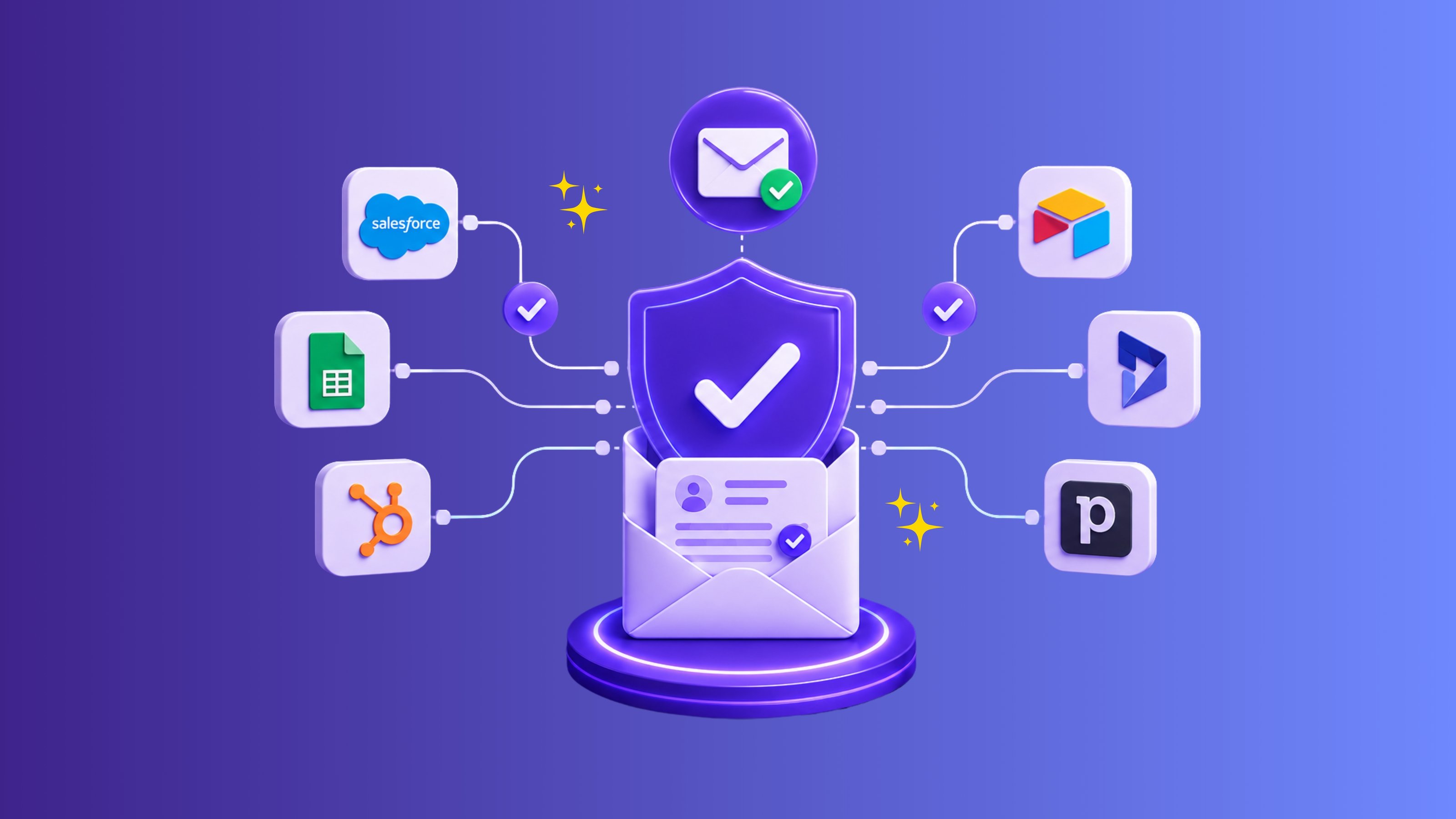
Consider a sales rep preparing for a call with a promising lead, only to reach a number that has been disconnected for six months. The contact left the company in January. Marketing was never notified, so the lead continued receiving nurture emails. Support was not notified either, and when the account came up for renewal, two separate teams reached out to the same outdated email on the same day.
No single mistake caused this. A record simply remained in the CRM after it stopped being accurate, and every tool connected to that CRM inherited the same outdated information.
This is the part of customer data quality that most teams underestimate. It rarely fails in one visible moment. It erodes gradually, tool by tool, until a sales team is working confidently from information that has not been accurate in months.
Your Sales Stack Only Knows What You Tell It
Most companies no longer run on a single system. A typical stack includes a CRM, a marketing automation platform, a sales engagement tool, a support desk, an analytics dashboard, and a series of integrations connecting them. Each tool adds real value, but each one also gives inaccurate data a new place to live.
The risk is rarely that one tool is wrong. It is that every tool agrees with the others, because they are all drawing from the same flawed source. The CRM typically sits at the center of this problem. Marketing platforms pull from it to build segments. Sales engagement tools use it to automate outreach. Support pulls customer history from it to manage tickets. Analytics tools use it to generate the reports that leadership relies on.
When an inaccurate record enters the CRM, it does not stay contained. A misspelled email becomes a missed campaign. A duplicate contact becomes an inflated lead count. An outdated job title becomes a misdirected personalization in an otherwise important account relationship.
Why Good Data Goes Bad
Data does not become inaccurate because someone was careless. It becomes inaccurate because circumstances change faster than most databases are updated.
People change jobs. Companies rebrand. Domains are retired. Employees receive new corporate email addresses when their company migrates platforms. None of this reflects a data entry error; it simply reflects normal business change outpacing the database. Industry estimates put average B2B contact data decay at roughly 30% per year, meaning a database that was accurate twelve months ago could already be a third inaccurate today, without a single record having been altered.
The way data enters the system compounds the issue. A webinar signup form captures names differently from a trade show lead scanner. A content download form may omit the phone number field entirely. A manual import from a partner list brings its own formatting conventions. Once enough of these sources are combined, inconsistency becomes the default state of the database rather than the exception.
Many organizations treat this as primarily a marketing list hygiene issue to be addressed on a quarterly basis. In practice, by the time marketing notices a rise in bounce rates, sales have likely already spent hours on contacts who are no longer reachable, and support has likely already misfiled a few accounts. The effects surface across the organization well before the underlying cause is identified.
What Inaccurate Data Actually Costs
It is worth being specific about the impact, since "bad data is bad" is true but not particularly actionable on its own.
For email marketers, every invalid or disposable address remaining on a list represents a small but real cost to sender reputation. Mailbox providers such as Gmail and Outlook monitor bounce rates closely, and a list with a meaningful share of dead addresses can affect deliverability for every subscriber on it, including those who are genuinely engaged.
For sales representatives, the cost is time spent pursuing contacts who left their roles months earlier, not due to carelessness, but because the data gave no indication otherwise.
For reporting, the cost is reliability. A pipeline forecast inflated by duplicate contacts counted as separate leads will look healthy right up until those deals fail to materialize, at which point the entire team has reason to question every figure in the dashboard.
For customers, the cost shows up in smaller but cumulative ways: a renewal notice addressed to someone who left the company months earlier, or a win-back campaign sent to a customer who never lapsed. Individually, these errors are minor. Collectively, they signal to the customer that the organization's systems do not accurately reflect the relationship.
The Fix Is a Habit, Not a One-Time Project
Many organizations treat data hygiene as something to address once or twice a year rather than as an ongoing discipline. A team runs a thorough cleanup, removes the most obvious errors, and considers the work complete. For a short period, the database looks healthy.
New records then begin flowing in again, through forms, imports, and manual entry, and the same issues start to reaccumulate. A cleanup that happens once or twice a year is still valuable, but on its own, it cannot keep pace with data that decays continuously throughout the year.
Organizations that manage this well treat periodic list verification and ongoing data hygiene as two parts of the same system, rather than choosing one over the other:
- Every new contact is checked on the way in, before it is synced to other connected platforms.
- Every import is reviewed before it reaches the CRM, before a campaign reveals the problem downstream.
- The full list is verified on a regular cadence, particularly ahead of major sends, to catch the decay that accumulates even when intake is well controlled.
Addressing data quality at the point of entry reduces how much accumulates between cleanups, and regular full list verification catches what intake checks alone cannot. Used together, they cost considerably less than waiting for a deliverability or reporting problem to surface on its own.
Verify Email Addresses Before They Reach Your CRM
Email addresses typically serve as the connective tissue across a sales stack, the field that the CRM, marketing platform, support tool, and billing system all use to recognize the same individual. If that address is incorrect from the outset, every connected system inherits the same error.
Consider a lead who submits a demo request form with a mistyped email, such as "jane@compnay.com" instead of "company.com." Without verification at the point of entry, that error proceeds directly into the CRM, syncs to the email platform, triggers a welcome sequence that bounces immediately, and affects sender reputation before anyone identifies the cause as a single mistyped character.
Verifying addresses at the point of capture, whether they arrive through a form, a webinar registration, or an imported list, addresses this type of error before it becomes a deliverability issue in several systems downstream.
Maintain the Data You Already Have
New contacts are not the only source of risk. An address that is verified and accurate today is not guaranteed to remain so in eight months. As roles change, companies are acquired, and domains are retired, a previously valid address can quietly become a liability on an otherwise healthy list.
This is why ongoing re-verification matters as much as validation at intake. Running an existing list through verification ahead of a significant campaign identifies addresses that have become inactive, begun bouncing, or turned risky, including accept-all domains, disposable addresses, and low-engagement contacts that can affect inbox placement for the rest of the list.
Identifying this in advance of a large send is considerably less costly than addressing a deliverability decline after the fact.
Consistent Data Is What Makes Automation Work
Every automated workflow in a modern sales stack, lead nurturing, onboarding sequences, sales cadences, and support triage, depends on the assumption that the underlying data is consistent. When it is not, automation does not fail visibly. It fails quietly, in ways that can resemble a process error rather than a data error.
A duplicate contact triggers the same nurture sequence twice. Inconsistent lifecycle-stage naming means a "Qualified Lead" in one tool does not align with "Sales Qualified" in another, so the handoff between marketing and sales breaks without an obvious cause.
Standardizing naming conventions for company names, job titles, and lifecycle stages across platforms is not a minor administrative task. It is what allows automation to run reliably without requiring a person to catch what it missed.
Clean Data Determines the Value of the Rest of the Stack
Adding another tool to a sales stack can meaningfully improve a team's efficiency. But no platform, regardless of how well it is built, can compensate for inaccurate underlying data. A capable CRM populated with dirty data will still produce unreliable reports. A sophisticated automation tool working from inconsistent records will still trigger the wrong sequences.
The organizations that get the most value from their sales stack are not necessarily the ones with the most tools. They are the ones whose tools are all working from the same accurate, current information. That distinction determines whether a sales stack compounds a team's effort or simply repeats the same errors across more dashboards.
The most effective place to start is where data enters the system: verify addresses before they reach your CRM, and continue checking the records you already have.