Email List Segmentation: 5 Strategies That Actually Work

Updated March 23, 2026
6 min read

Email marketing is still one of the most effective marketing strategies your business can use, but that means that it is also becoming ultra-competitive.
As your subscribers’ inboxes fill up more and more as time goes on, it’s becoming trickier to produce unique content that keeps your audience engaged.
This is where email segmentation comes in. We all know that breaking your mailing list down into smaller groups helps you create more targeted content, but are you using it to its full potential?
Over 90% of marketers have seen an improvement in their engagement rates from email segmentation, so if you’re not already utilising it, we’re here to help.
Why Email Segmentation Matters Now More Than Ever
As your mailing list grows, treating all of your subscribers the same is only going to cause harm to your results.
Sending the same content to a long-term loyal customer as one who has made a single purchase a few years back means there is going to be a huge lack of relevance for at least one of the parties, and this is only going to result in your subscribers losing interest.
Businesses that use email segmentation in their campaigns see a 760% increase in revenue in comparison to non-segmented ones, so if you’re failing to utilise email marketing segmentation, you could be missing out on huge profit margins.
Your subscribers want to receive content that aligns with their preferences. Not only does this mean they’ll find your content more interesting, but it also helps them align with your brand.
Now that email marketing tools are more advanced than ever before, you have no excuse. Using platforms that allow you to create eye-catching designs, write up engaging content, and carry out email segmentation easily gives your email marketing efforts endless potential, so knowing how to use them to their fullest can transform your strategy.
Making Sure You’ve Got the Foundations for Email Segmentation
To be able to successfully segment your mailing list, you need to have the basics already in place. Without this, even the best email campaigns will struggle to create worthwhile results.
From the get-go, you ideally should have been collecting data about your website users and encouraging them to sign up to your mailing list. But if not, then don’t worry, it’s never too late to start growing your audience.
With the help of a landing page builder, you can make this process much easier. Having a specific web page for each campaign will help maximise the impact of every email you send.
Instead of your users arriving at a generic web page, they can enjoy an easy user experience that takes them to where they want to be. These dedicated landing pages steer users towards the desired action, helping you get the most out of every interaction.
Making sure you have the foundations in place before diving straight into the segmentation takes the pressure off later down the line and can help you grow an engaged mailing list that is worth targeting.
5 Email Marketing Segmentation Strategies to Try for Yourself
Let’s talk through five of the most effective email segmentation strategies that you can use to improve engagement and increase your conversion rate.
Send onboarding emails to new subscribers
When someone joins your mailing list, it means they currently have a strong interest in your brand, so you need to act fast to keep up the momentum going.
Instead of just sending them the upcoming content you’ve got scheduled, you should send them an introductory email or series. Since they are new to your mailing list and likely don’t know what you have to offer, this is your time to introduce your brand and engage their interest.
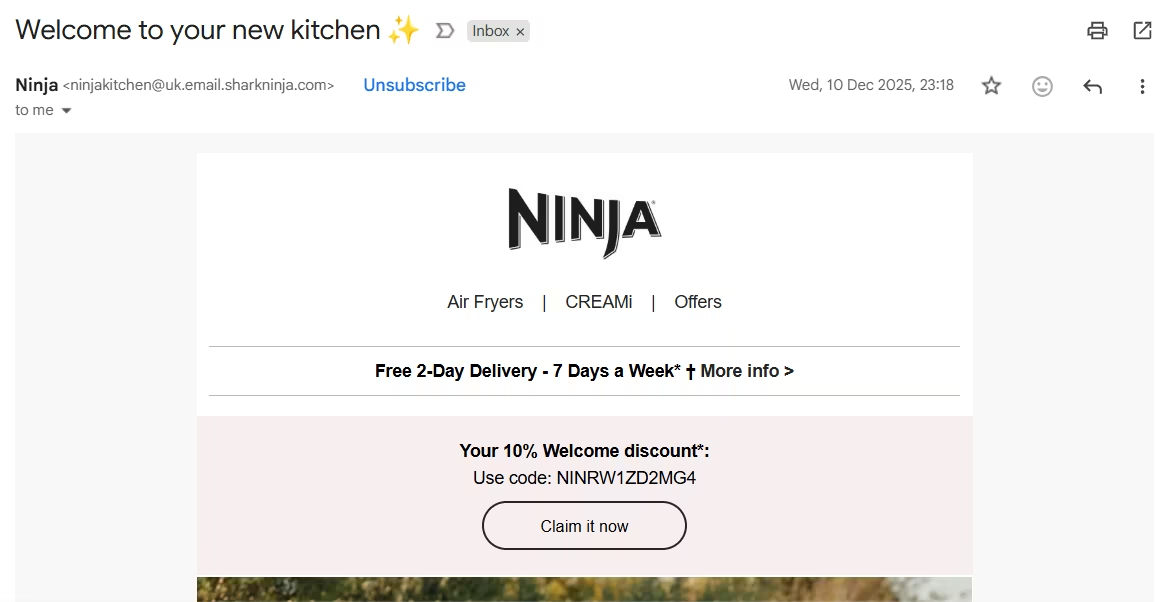
Using email segmentation to specifically target new subscribers means you can reach out with handy resources, product information, and best-sellers that are ideal for newbies.
The email below is one I received from Ninja after joining their mailing list. I had my eye on a new airfryer, so the second they landed in my inbox with a 10% welcome discount code, they had me right where they wanted me.
Split the sales funnel into different groups
With your mailing list consisting of all kinds of subscribers, sending the same email content to all of them is bound to negatively impact your engagement rate.
To put it simply, not everybody has an interest in your latest product launch or a newsletter talking about what your business has been up to over the last month.
Take a step back and consider the different stages of the sales funnel, and carry out email list segmentation accordingly.
Email segmentation tools allow you to group subscribers based on certain behaviours. Whether this is people who have interacted with certain types of content in the past or groups based on average order spend, you can then tailor your content much more.
If your subscribers are only receiving content that aligns with their preferences, there is a much higher likelihood of them being interested in what you have to say and keeping an eye out for your brand name in their inbox.
Set up abandoned cart emails
If a shopper has previously added an item to their cart, but never got as far as checking out, you have a clear indicator that they are definitely interested.
By reaching out with personalised emails that remind them of the product that they were looking at, it could be the push they needed to make the purchase.
Since one in three people who clicked an abandoned cart message convert, this is a powerful email segmentation strategy that your business should definitely be utilising.
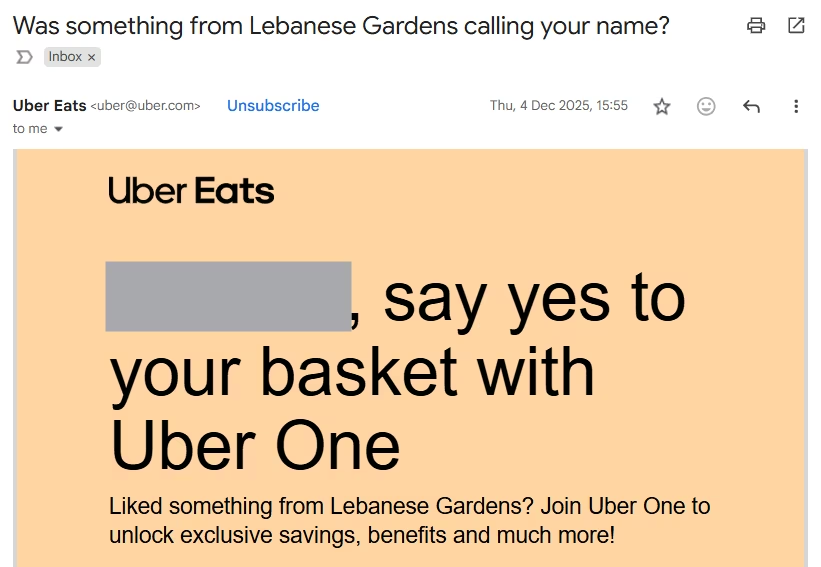
The email below was sent to me by Uber Eats after I added some food to my basket, but then decided against it. Instead of applauding me for deciding against the takeaway urges and cooking my own dinner, I was hit with more temptation.
As well as just drawing me back in with a reminder of the local Lebanese restaurant, they also showed me how upgrading to their Uber One subscription could save me money on my next order.
Reach out to lost customers
A lot of your mailing list is likely to be made up of people who made an order years ago and have never returned since, so let’s see what we can do to bring them back.
Through email segmentation, you can specifically target lost customers who haven’t made an order or interacted with your emails in a while.
Instead of sending them generic content that they’re unlikely to be interested in, create emails that acknowledge their lost custom. Phrases like ‘We miss you!’ and ‘Do you remember us?’ are likely to catch their eye when they scroll through their inbox and pique their curiosity.
Once you’ve got them to open the email, you need to make sure you’re giving them a reason to reconsider your brand. Whether this is through a discount code or even asking for their feedback, the personal nature of the email gives you a higher chance of prompting interaction.
Reward the most loyal customers
Your returning customers are some of the most valuable, so make sure you go the extra mile to make them feel special and build up the relationship further.
Using email list segmentation to separate the top customers means you can target them with unique content.
If they receive exclusive content, whether that be a heartfelt thank you message, early access to new product launches, or exclusive discounts, they are more likely to remain loyal to your brand and make repeat purchases.
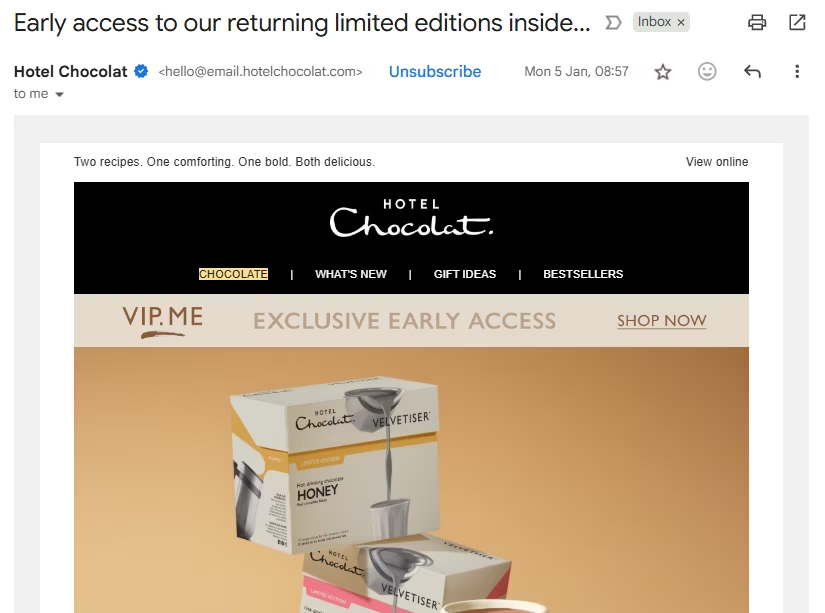
The email below (another food-related one, what does this say about me?) was sent to me from Hotel Chocolat. I am a member of their reward scheme, VIP.ME, and they sure do know how to make their subscribers feel exactly like a VIP.
The opportunity to have early access to their newest launch definitely makes a product that I otherwise wouldn’t have much interest in feel all the more exclusive.
Achieve Long-Term Results From Your Email List Segmentation
It’s definitely a case of quality over quantity when it comes to your email marketing efforts. Consumers don’t want to be spammed with continuous content that has zero relevance to their interests.
By breaking your mailing list down into smaller groups, you can tailor content to make sure it is actually relevant to your audience. This way, the likelihood of it actually being read and leading to conversions increases drastically.
From welcoming new subscribers with helpful onboarding content to showing your gratitude to your most loyal customers through exclusive deals, there are various ways you can play around with your email segmentation to find the strategies that work best for your business.
At the end of the day, you need to put yourself into the shoes of the consumers in each of your segments and ask yourself what content they are actually hoping to receive.
Going the extra mile to send out personalised content that offers real value is the key to successful email list segmentation, and once you get started, you’ll see the results for yourself.